
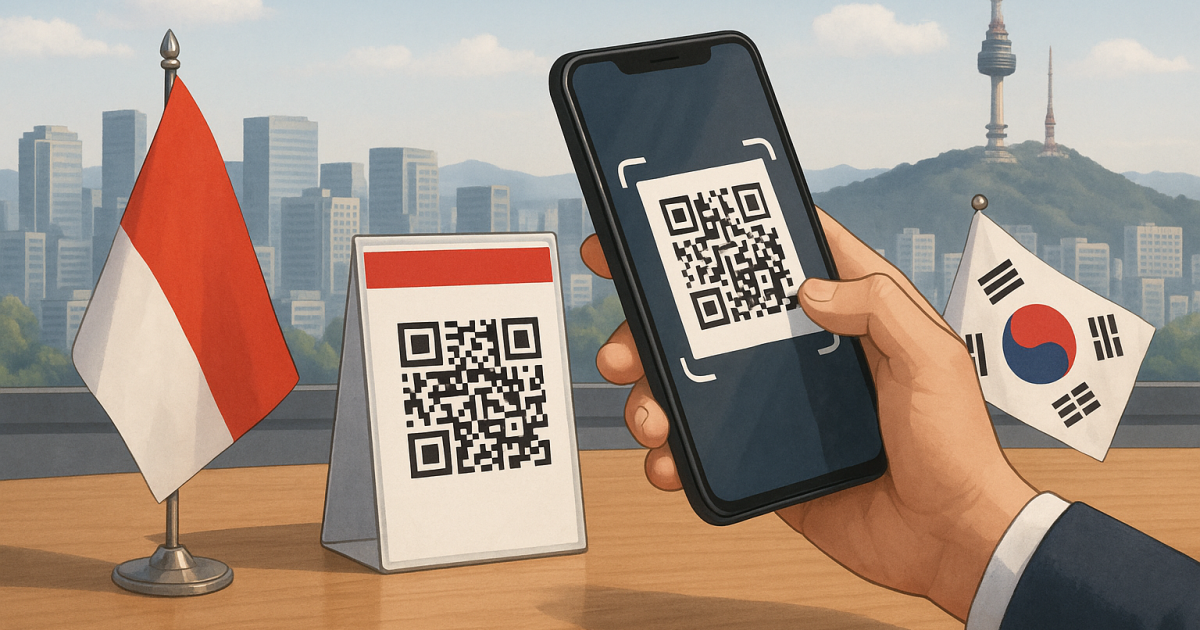
Indonesia’s QRIS Expands Cross-Border Payment Reach to South Korea
Indonesia’s Quick Response Code Indonesian Standard (QRIS) has extended its cross-border payment services to South Korea, enhancing convenience for Indonesian travelers and businesses abroad. This move follows successful integrations in countries like Japan, Malaysia, and Singapore.
Growing Adoption of QRIS in Asia
QRIS, Indonesia’s standardized QR code payment system, was initially designed to unify digital payments within the country. Over time, it has evolved to support cross-border transactions, allowing users to make payments seamlessly while traveling or engaging in international trade.
With South Korea now added to the list, Indonesian consumers can use QRIS-enabled payments at participating merchants, simplifying transactions without the need for currency exchange or additional payment apps.
Benefits for Consumers and Businesses
The expansion into South Korea offers multiple advantages. For Indonesian tourists, it reduces the hassle of managing multiple payment methods abroad. For businesses, especially those involved in tourism and retail, it opens up new avenues to attract Indonesian customers by accepting familiar payment options.
Moreover, the cross-border functionality of QRIS supports Indonesia’s broader goal of promoting digital financial inclusion and enhancing economic ties within the region.
Future Prospects for QRIS
Following its rollout in South Korea, QRIS is expected to continue expanding into other countries, further strengthening Indonesia’s presence in the digital payments landscape. This growth aligns with global trends favoring contactless and QR code payments, especially in the Asia-Pacific region.
As QRIS adoption widens, it could potentially foster greater regional cooperation in digital finance and streamline cross-border commerce for small and medium enterprises.
Conclusion
The launch of QRIS payment services in South Korea marks a significant milestone in Indonesia’s digital payment ecosystem. By enabling seamless cross-border transactions, QRIS not only benefits individual users but also supports broader economic integration across Asia.
Source: Tempo.co
